Aleksandra Skubis on Authenticity, Passion, and Her Unique Journey in Social Media
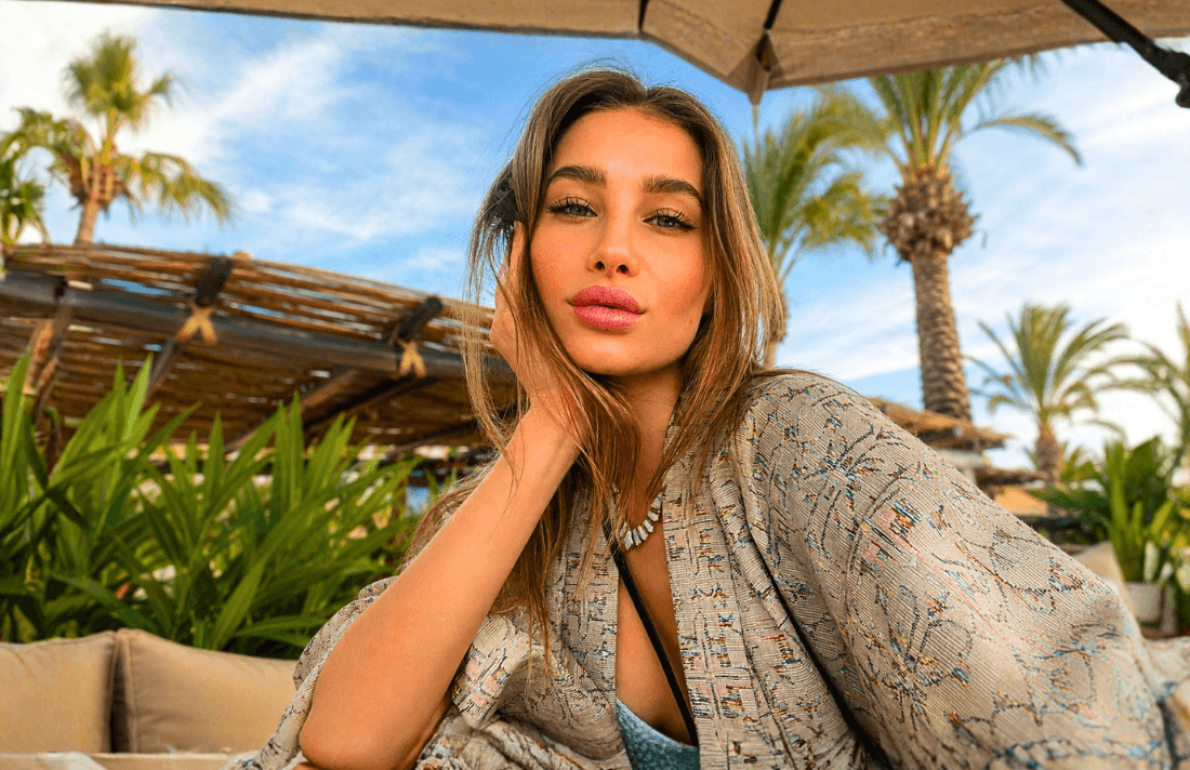
Aleksandra Skubis, a model and content creator who has won over her community with her natural charm and mindful approach to life. In this interview, she shares what being a “spiritual gangster” means to her and how she brings spirituality into everyday life. She reflects on the pressures of social media and finding peace in a world full of expectations. She also opens up about her future plans, personal passions, and biggest dreams.
How did your modeling journey begin? Do you remember your first photoshoot where you felt it was something more than just work in front of the lens?
My modeling journey didn't have a spectacular beginning—it was rather paved with mistakes and missteps. To be honest, at first, I didn't fully know how to go about all of it. But one thing was certain: I had always felt that I wanted to be a part of the fashion world.
I learned through trial and error until I finally managed to reach a point I can call the beginning of my professional career. It started with local projects and test shoots with various photographers. It was during one of those shoots that my first mother agency spotted me. They pointed me in the right direction and showed me what a model's path really looks like. Then came my first international contracts—and that was when I understood what this world is truly all about.
Do you remember the moment when you felt that this was something bigger? Was it when the first agency reached out to you, or had you felt it even earlier?
I think a turning point was my first test shoots done through the agency—before leaving for a contract in Paris. Everything was already confirmed back then, and I was in the process of building my book. That was precisely when I felt: okay, this isn't just posing for photos for fun anymore—something truly special is starting here.
The trip to Paris itself was a huge lesson in humility for me. It's a very demanding market, especially for new faces. I came across both enthusiasm and a complete lack of interest - and that can really give you a reality check. But I managed to take part in one really cool project that built my confidence and gave me a huge boost of motivation.
The most valuable part of it all was being able to directly engage with the fashion world—with art directors, brands, and the people who create entire photoshoots. Only then did I realize that what we see on Instagram or in finished photos is just the crème de la crème—the final result of an entire, often very demanding process.
People rarely consider what the daily routine looks like: hours of castings, discussions with the creative crew, building a portfolio. But that is where real modeling actually begins.
How did participating in Top Model fit into your career path? Do you see this project as genuine support for your career? What surprised you about it, and what was the hardest part?
Top Model definitely gave me a huge opportunity. When I returned to Poland, even though I already had some experience and had done a bit of work internationally, I didn't have any foundation or backing here. And I feel like in Poland, the fashion industry very often works with celebrities—people who already have an established name, are well-known, and automatically become the face of brands.
Thanks to the show, I was able to show that I exist—and that I didn't just appear out of nowhere. Top Model gave my persona character, a story, and above all, visibility. It opened doors to many campaigns and collaborations on the Polish market, for which I am truly very grateful.
What surprised me was how much people start perceiving you differently once you appear in a format like that. You gain more respect because you have that experience under your belt—you know how to act in front of the camera and how to react in stressful situations. And I think that’s what Top Model is really about - being put to the test. You have to be able to control your emotions, know what you're saying, and how you're behaving. It teaches immense maturity—not only professionally, but personally as well.
You mention that Top Model opened doors to many campaigns and collaborations for you. But what did your social media look like right after the show? Was there a sudden boom and greater recognition? How did you navigate all of that, especially since today you aren't someone who posts every day?
Definitely—after the show aired, there was an enormous amount of interest around me. And while that might sound like a dream come true, to be honest, at first, it all felt very overwhelming. Of course, there were plenty of positive comments, words of support, and kindness, but that whole world was a bit too intense for me. I didn't fully know how to find my footing in it.
I think that subconsciously, I cut myself off from it a bit at first. That sudden wave of popularity was unpredictable for me. Over time, however, my social media started to take on a form that was more "me"—calm and subtle. Today, it brings together people who support one another and share thoughts, rather than throw judgments around. And I am hugely grateful for that—because I know that not everyone is so lucky.
Unlike many other creators, I didn't experience a large wave of hate. My social media isn't a place with a toxic atmosphere—it's more of a space for sharing positive energy. But returning to the question—yes, a lot was happening. There were moments when I couldn't eat peacefully in a restaurant because someone recognized me and asked for a photo. Up to a certain point, that was uplifting—you see that your work resonates with others. But in the long run, it could be very overwhelming.
You say that this sudden wave of interest overwhelmed you—to the point where you felt the need to step back. So you didn't have a moment where you felt you had to create content for your followers every single day?
No, I didn't have that feeling at all. I didn't create any specific plan, nor did I have a strategy to immediately "strike while the iron is hot" right after Top Model. Of course, somewhere in the back of my mind, there were thoughts that maybe it would be worth growing my social media and taking advantage of that moment. But very quickly, I realized that I didn't want to do it in a way that wouldn't be authentic.
For me, it was important that everything I posted aligned with who I am, my pace, and my lifestyle. I didn't want to create just for the sake of posting, to satisfy the algorithm, or to meet someone else's expectations. And I think that's precisely why I managed to build a community that understands and appreciates that.
Besides modeling, you have another important passion—yoga. You are a certified instructor, so the practice of body and breath has become an integral part of your life. How has your approach to yourself changed through yoga? Do you remember the moment when it affected more than just your body—your way of thinking, reacting, and being with yourself?
Yoga came into my life at the beginning of 2021. It started with attending various classes in Warsaw studios—I treated it more as a form of relaxation and an interesting way to spend time. But to be honest, back then I didn't yet feel how deeply yoga could work. It was only when I decided to take an instructor course that everything changed.
During the program, I was committed to a daily, meticulous practice—not only physical, but spiritual as well. Pranayama, or working with breath and meditation, became a permanent part of my daily routine. And it was right then, after a month of such complete practice, that I felt as if I had woken up. I started to notice where I actually was and what I was feeling—and that was truly groundbreaking.
By nature, I have a hard time waking up in the morning. I'll do it, but without enthusiasm. And after that course? I was waking up before my alarm clock, at 5:59 AM, with a smile on my face and thinking: this is going to be a good day, I can do something cool! And that was the biggest discovery for me—that yoga doesn't just improve the body, but gives real, vital energy that carries us forward. Regular, conscious practice truly changes everything.
In one of your posts, you wrote that the gym isn't just a place to work on your body, but a battlefield with yourself—against laziness, against excuses. Have you learned something about your strength and patience through regular movement?
Definitely, yes. When you fight small battles with yourself every day—to do something you don't feel like doing at all in that moment—you start to truly understand what discipline and patience are. Because let's be honest: a passion for the gym, climbing, or any sport doesn't appear right away. It's hard at first. And that is precisely why it's so hard to fall in love with.
But over time, when you break the pattern, you start to see the beauty in your body listening to you, in its ability to rise to challenges. And real progress—the kind that brings the greatest satisfaction—doesn't come steadily. It appears both when you are motivated and when you have no motivation at all, but you take action anyway.
It gives you space. For the body, for thoughts, for a deeper understanding of yourself. Through this, you learn how to adapt your practice to your own needs, how to talk to yourself, and how to build a healthy relationship with yourself.
What you're talking about shows your approach to your body—treating it as an ally. Did that come naturally? Or did it require specific learning and inner work? What did that process look like?
It definitely didn't come naturally—it was a process that required a lot of work. At first, I felt like an enemy of a good life was living inside my head. A voice renting a room in your consciousness, constantly repeating: you can't do it, it's not worth it, it won't work out. And my main goal was to get rid of that voice.
Over time, I realized that taking action is key—even when you don't feel like it, when it's hard or uncomfortable. That's why climbing is so close to my heart—because these are practices that teach you to step out of your comfort zone. And it is precisely in this battle with yourself, in constantly transforming discomfort into something familiar and tamed, that change begins.
Along with this regular practice, that inner critic began to change. From someone who clipped my wings, it turned into a voice saying: try, you can do it, you'll manage. And that is where the greatest strength lies—because when your body becomes your ally rather than an obstacle, an incredible sense of freedom appears. Not just physical—but above all, mental.
Everything you're saying right now is very inspiring, which can also be seen in your posts. You also mentioned that you've managed to build a really great community on social media. Do you feel that through yoga and sports, you are creating a safe space for women to just be themselves?
Yes, that is truly one of the most important goals for me. As a woman, above all, I want to be a support for other women, especially younger ones who are on their own journey of personal growth. I like sharing my experiences and problems with them, which are often similar, and sometimes exactly the same.
I'm glad I've managed to create such a safe space on social media—a place where girls can speak openly about their difficulties, but also draw strength from what I share with them. That sense of community and mutual support is very important and inspiring to me.
That's precisely what is beautiful about social media—the fact that, despite everything, people can connect and empower one another, boosting each other's energy to make positive changes in their lives.
Do you encounter stories on a daily basis from other women telling you that they feel better about themselves thanks to your content?
Yes, recently I had a special situation that really moved me. I regret that I didn't record that moment back then, because to me all of this is so natural—I often don't want to interrupt such moments just to turn them into "content." It was a beautiful moment that I didn't want to ruin.
I was standing with Michał Piróg at an event. A girl came up to me and said she was so grateful for my posts about strength, which I manage to express so beautifully. She told me that thanks to them, even though she had never had the motivation to exercise, she finally decided to start.
What I heard was deeply moving for me—she said that my actions gave her the inner strength to change her life. She asked me not to stop because she needs even more of that motivation.
It's an amazing feeling when, over time, you see that what you do impacts other people. It's no longer just my mom—my biggest fan who always supports me—but also other people who find strength and energy through it. That's the best gift I could receive.
Staying on the topic of motivation—your expedition to Everest Base Camp was a big source of inspiration for many people. In one of your posts, you wrote that it wasn't just an ordinary trip, but a turning point. You also said that you didn't just want to show pretty photos, but truly tell the story, because this experience changed your perspective on yourself and life. So I'd like to pause on your relationship with the mountains. What do these solo hikes give you? How do they affect your daily life, your way of thinking, and maybe even how you return to people and to being online?
The thing about solo hikes is that for 24 hours a day, you are alone with yourself. Many people repeat that to be happy, you first have to love yourself. In the mountains—especially when you're in discomfort—that truth takes on a new dimension. Those are the moments when it's easiest to complain, give in to discouragement, and stop noticing what's around you.
Expeditions in the Himalayas last for weeks. It's a vast amount of space and time to analyze your life. In the daily rush, when we're chased by a list of tasks and ambitions, we rarely find a moment to stop. We put unresolved emotions on hold—and they stay inside us.
Solitude on the trail, in a place where no one bothers you, provides a priceless opportunity to look at both the good and the difficult moments. It's a time that allows you to reach the root of your emotions, to understand why we perceive the world in one way and not another. It fascinates me that no one teaches us this in school.
I realized that the key is patiently moving through your emotions—stone by stone, step by step—down to the situations and memories that can block us from being the best version of ourselves.
During those ten days of hiking, I had time to process many stories within myself—painful ones, love stories, and completely different ones. In daily life, it's hard to reach such deep layers. That's why I value this time doubly: it's not just physical effort and a battle with altitude, but also a journey deep within oneself.
In the text, you wrote that this encounter with yourself was the biggest challenge of this expedition. What was the hardest part of that encounter? Was it reaching those deeper layers you didn't know about before, or something completely different?
The hardest part was precisely digging up all those emotions and trying to understand why I felt a certain way. Situations arise in life that are exceptionally difficult for us. I feel like I often "put them in a folder"—lock them inside—and wait for a mountain trek to slowly open that folder. Then I can break everything down, ask myself questions, and quietly reflect on the answers.
In daily life, there is absolutely no space for such a process to happen. Without it, it's hard to heal and process certain things, especially when they involve painful experiences.
For example, I lost someone close to me—my grandmother. She was one of my biggest motivations. That loss remained unresolved within me for a long time, and the expedition became the moment when I could return to it, understand what happened inside me back then, and give myself the space to find closure.
Do you have any personal rituals when you're in the mountains? Something that grounds you and helps during those difficult moments when you meet yourself face-to-face?
I have various forms of rituals, but I don't like acting schematically. I believe that stimulus is key—every new stimulus gives the opportunity to experience something for the first time and breaks us out of repetition. It is precisely in this "first time" that full concentration and the freshness of the experience lie.
I like taking notes. Memory can be unreliable, and written thoughts allow me to reflect back on where I was at a given moment. It's a way to preserve fragments of myself from days, months, or years ago.
Meditation also accompanies me, having been my constant point of reference for two or three years now. In the Himalayas, I had the extraordinary opportunity to meditate with Buddhist monks—it was a cleansing experience, filling me with energy and a space where I could look at myself without judgment, with gentleness and understanding. You can achieve the most with such an attitude, because we stop demanding immediate results and start trusting the process.
And do you think meditation and the trip to the Himalayas helped you close certain chapters in life more, or rather open up to new spaces and emotions you had no idea about before? How was it in your case?
I feel that, above all, my awareness grew. I wanted the quality of my thinking and my "being" to elevate to another level—so that every experience would have a deeper dimension. Through such practices, we can give ourselves something extremely valuable: the ability to perceive what was previously invisible.
We only have one life, and it often seems repetitive. Yet it is up to us what quality we give it and what tenderness we develop within our sensitivity. It is precisely this tenderness that allows us to notice small, yet significant things that can change us and our outlook on the world.
I also believe in one shared energy that permeates all of us and the entire universe. We are a part of it—we originate from a single element that can create something as complex as a human being, and yet still remains connected to us through that same energy. That is precisely why it's worth growing, discovering oneself, and listening to those subtle signals within that allow us to resonate with what happens on the outside.
Your social media is very consistent and carries a strong aesthetic presence. Is this visual and thematic consistency the result of consciously building a narrative, or rather a natural extension of your sensitivity, which you discovered even more deeply through trips like the one to the Himalayas?
Aesthetics, light, color—all of these carry a specific energy and build an aura that I want to bring to the people engaging with my content. I care about making each post not just information, but also an invitation to a certain atmosphere that you can feel. I believe in the multidimensionality of a message—for something to truly reach us, it has to resonate not only visually, but also internally. For me, the energy that a piece of content carries is the most important element—that's why aesthetics aren't something detached, but a natural extension of what I feel and what I want to share.
You mention aesthetics as something that sets the mood and builds an aura—when you create content, do you usually start with an image or with words? What typically comes first?
I would never rule out either one, because I think a single sentence can set the energy of the day that we'd like to carry forward, or even a single image—some aspect that inspires us to emanate something appealing ourselves. It works a bit like attraction. Aesthetics are an invitation to the viewer, who then decides for themselves what is important to them. Social media teaches me that everyone sees the world completely differently—everyone picks those elements from my story that resonate with their daily lives.
Does it happen that certain thoughts arise spontaneously in your daily life, and then—after some time—return in Instagram posts? Or do you treat content creation as a more deliberate, planned process?
To be honest, I am constantly learning how to plan Instagram and work according to a routine, but I have to admit that it feels very unnatural to me. I want what I share to be inspired by my daily life and experience—and after all, that doesn't follow a regular rhythm. That's why my social media is a bit irregular, but I think that is precisely what makes it special. I don't treat it as a tool for making money—I care about creating an authentic, genuine space that will be valuable to others precisely because it stems from real lived experience.
Pausing on this authenticity—you are someone with clear values, and you often run various campaigns on your profile. How do you choose the brands you decide to collaborate with? What needs to align between you and a brand for you to undertake such a collaboration?
I won't hide that I really love aesthetics, details, and fashion, but the path of spirituality is equally important to me. I focus on representing brands that carry a message—something more than just appearance or aesthetics. I've had many offers from brands that didn't quite align with my values. Even though it could have been good money, I didn't feel convinced to promote them. For me, authenticity is paramount, and on today's internet, that is becoming increasingly rare. That's why I consider it a huge privilege that I can work in alignment with what I truly believe in.
Moving forward, are there any brands you would particularly like to collaborate with because you feel their mission and aesthetics align perfectly with your values?
Yes, there are really quite a few of them. I feel that nowadays many brands notice how important a deeper message is—one that brings comfort and helps people. I'm definitely interested in those that focus on female energy—brands that promote being a go-getter, a motivator, and a support system for other women. I have a few specific brands in mind, but I won't reveal them just yet.
Your activity focuses mainly on Instagram. What makes this platform in particular the best place for you to express what you want to convey?
I feel like Instagram is a perfect fit for my generation—people around 24–34 years old. TikTok is more of a platform for younger people, and YouTube for older ones. My audience consists of conscious, curious people who already have established values and know what they want out of life. It's a huge compliment for me that I can share my space with precisely these kinds of people who are looking for something more.
Aren't you afraid of bringing up important, sometimes controversial topics on your social media? Do you treat them as a tool for expressing your views?
When it comes to views—of course I do, but I don't want to be a rigid person who closes themselves off into a single box or mold. I'm very tolerant and I understand that not everyone has to share my beliefs, and that's okay. Unless we're dealing with situations that are blatantly harmful—whether toward animals, people, or anything else. Besides that, it's important to me that everyone has space to express themselves, while at the same time respecting others.
You talk a lot to women and about women. How do you understand femininity today? How has it changed over the years? Do things like yoga, sports, mountains, and fashion help you discover and redefine it?
Femininity used to be heavily restricted—there were rigid ideas about how a woman "should" look and how she should behave. Today, the world gives her much more freedom and opportunities for expression. I think it is undergoing its own renaissance—a woman is not just a single role or image, but a space that holds different energies, emotions, and aspects. To me, femininity today means giving oneself time and attention to be able to discover it on one's own terms.
In your Instagram bio, you have the phrase "spiritual gangster." What does that mean to you, and how does it connect to the Ola we know from, for example, photo shoots?
To me, "spiritual gangster" is a tongue-in-cheek term, but one with a deeper meaning as well. I see myself as a spiritual person who lives in harmony with her own conscience and doesn't stick to rigid molds of how she should look or behave. "Gangster," on the other hand, is my fierce side—strength, courage, and confidence.
It's a combination of gentleness and power, which is often visible in my photo shoots. "Spiritual gangster" gives me freedom from imposed rules and allows me to listen to myself—to build spirituality authentically, on my own terms. I believe that true happiness is born when we move away from coercion and obligation, and do things from the heart, out of an inner need and desire. Then everything flows naturally—in its own rhythm, in its own truth—and brings the most beautiful results.
And how does this spiritual gangster manifest in everyday situations, for example, when you're having a bad day?
Being a spiritual gangster is primarily about the ability to stay calm and keep your distance in difficult situations. Yoga helps me a lot with this—I used to be easily thrown off balance, but now I can find lightness and take a breath, even when things don't go my way. It's also a way to detach from molds and opinions that don't suit me, from bad energy or emotions that don't resonate with who I want to be. A spiritual gangster is like a bulletproof shield against life's negative bullets—not with weapons, but with inner strength and ease. Because of that, I can give myself space for bad emotions, but I don't let them stop me.
Right, because we live in a world today that heavily rewards consistency and immediacy, and you're going a bit against the grain. Do you see this as a statement in itself, an invitation to a different way of being online?
It would be great if people started to understand how important authenticity is in social media. For me, it's not a struggle—unlike for many other creators who have to produce content every day and often end up with low-quality posts because ideas simply run out. I wouldn't want to feel bad myself, forcing something out. I prefer to spend more time creating something valuable that people will want to come back to, rather than just "firing off" a new stimulus every day—a quick dopamine hit.
That's exactly why I shared a podcast by a doctor who talks about how these fast reels affect our dopamine levels and how that alters our perception. I know I'm saying something counter to the mechanisms of social media, but I want to show that it's possible to function differently—in a slow-life style, with greater mindfulness and authenticity.
And do you feel that your community understands and appreciates this aspect—that you don't have to be online non-stop to be present?
Yes, I definitely feel that and I really appreciate it. I think that the affection built over the years of my work makes people stay—not because I only offer them entertainment, but because they are curious about what's happening in my life. That truly means a lot to me. Many people have a similar approach to social media as I do—they understand that being online 24/7 constantly is unhealthy and that it's worth stepping away from it consciously.
I also promote not using filters and various face "beautifiers," because that only deepens the lack of inner fulfillment and fuels an endless chase after something that is actually unattainable. It's a trap of modern civilization that is worth breaking free from. And that is precisely what I try to teach myself and others.
I would also like to develop a space even more where I can share valuable content, perhaps with greater consistency, which would allow me to attract even more people. But above all, I value the freedom to share what is important to me when those things actually happen in my life. To me, that is a very valuable and authentic stance.
Right, because your activity, I think precisely because of this authenticity, always meets with a very warm reception. But who are these people on the other side of the screen to you?
To me, they are primarily people with whom I can share my life. I don't treat them as fans, but as potential conversation partners—people I can talk with, exchange insights with, and sometimes motivate to take action. And that is precisely why this space on Instagram is so special to me, because we treat each other as equals there, as if in an authentic, sincere relationship.
Staying with this metaphorical journey—are there any projects you can tell us about today? Maybe small dreams that are already sprouting, or something bigger?
Yes, definitely! I feel like my Instagram is developing very dynamically right now. I recently signed a really interesting contract, so very soon you'll be able to see the results of this collaboration right on my Instagram. And as for dreams—traveling is the most beautiful thing in the world to me. I plan to go to India next year. I've been there twice already, but it's such a huge country that you either need to spend a month there or explore each region one by one. I dream of seeing the entire country someday.
Besides that, there will definitely be mountain trips too—I just returned from Kościelisko, and I have plans for Orla Perć and Rysy. Next year, I would also like to see the French Alps with my own eyes.
What would you like to wish your followers and social media community—both those who already know you well and those who are just discovering you?
First and foremost, I would wish them inner peace and the courage to be themselves—truly, not just for show. That they are able to listen to themselves in a world full of stimuli, not get lost in their sensitivity, and not silence their intuition. That they aren't afraid of change—even if it comes slowly. And that they know how to find joy in the small things that don't shout, but stay in the heart.
To those who have been following me for a long time—thank you for your presence. For the warmth, for the space we create together.
To those who are just discovering me—I wish that you find something here that moves you, calms you, or simply gives you the feeling that you are not alone in your thoughts.
I hope that what I share will be not only an inspiration, but also a reminder that we don't have to be perfect to be real.

The NativeHash editorial team is composed of PR professionals, social media specialists, and influencer marketing enthusiasts who have extensive experience and a unique passion for creating effective digital communication strategies. Thanks to their broad knowledge and dedication, our team ensures high-quality services and marketing solutions tailored to the needs and expectations of our clients, helping them achieve success in the digital world.
BLOG
Want inspiration?
-
Are you interested in staying updated on the latest trends in influencer marketing, social media, and digital projects?
-
Do you want to learn practical tips, creative ideas, and original collaboration formats with influential creators?
-
Are you curious about effectively implementing innovative solutions and new technologies in online campaigns?
-
Do you want to read interesting interviews with favorite creators, creative brands, and industry experts?
Let's talk
If you think we're a good fit for your project, you have any questions, suggestions, or simply want to get in touch with us and say „hello”, feel free to use our form, and we'll get back to you within 48 hours.
CAMPAIGNS
Discover
possibilities
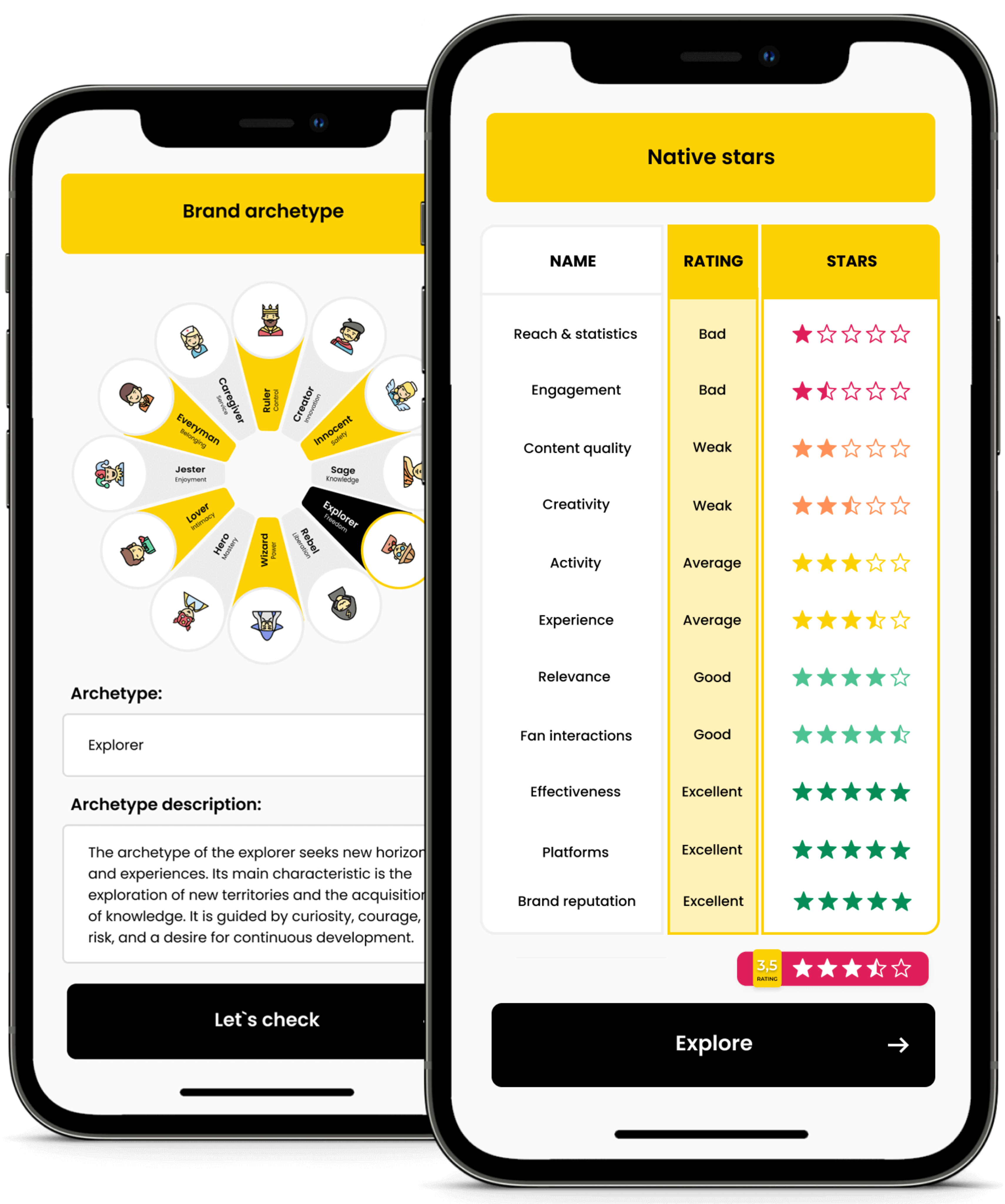
Run exceptional campaigns and collaborate with favorite creators! Harness the power of new technologies in marketing and reach your audience in an innovative way. Download the free app from Google Play and discover its inspiring features.

LET'S GO
More knowledge?
Do you want to read more valuable
and motivating content? Sign up for our newsletter.
COMMUNITY
Get social
Like our profiles, join our community,
and stay up-to-date with the world of digital content creators.