Aneta Gąsiewicz - How to Create Viral Content and Build a Brand on Social Media

Aneta Gąsiewicz is a social media expert who has spent years analyzing the mechanics behind viral content and effective communication strategies. In this interview, she discusses how to create attention-grabbing content, build an engaged community, and grow a brand on social media. She also shares practical insights on maximizing reach, collaborating with brands, and navigating the latest social media trends.
What made you start in social media, and what did your early days look like?
It all started quite spontaneously. I needed to learn how to create content by myself, but back then, I had no clue where to begin. At one point, I really wanted to become an influencer, but I didn’t yet understand what viral content was, how it worked, or why some videos gain massive reach while others fall flat. Earlier, I ran a blog and navigated social media purely on intuition, but over time I decided I truly wanted to grasp the mechanisms behind effective content. I wanted to learn how to craft posts with high-reach potential and understand why specific formats work. Virality isn’t purely accidental. Many people assume content just "hits" by chance, whereas in reality, you can learn to understand what makes certain content succeed. I figured that once I mastered this skill, I could develop virtually any idea, regardless of the niche or topic. I would know how to build an account and reach the right target audience. Since I constantly have plenty of ideas, I knew this knowledge would serve every future project. And that’s exactly what happened - later on, I tested various concepts and successfully grew multiple accounts. I realized the niche itself isn’t decisive; what truly matters is the ability to produce content engineered for high reach. It all began with a personal need. I decided I had to learn it, and I simply did. I drew most of my insights from creators abroad, primarily from the United States, where social media trends and strategies emerge much earlier - often arriving in Poland a year, two, or even later. So, I started learning from American creators: purchasing courses, reading e-books, attending workshops, and diving deep into the subject. Then came testing everything in practice, because acquiring knowledge is one thing, but applying it to see what actually works is what counts.
Completely understandable. Do you remember the exact moment you realized social media could become your full-time job?
It didn't happen overnight, nor did it happen at the very beginning of my TikTok journey. When TikTok first blew up, I still couldn’t gain any traction on Instagram. Today I would know exactly what steps I should take, but back then, I was completely lost. Even when TikTok launched in Poland, I didn't jump in immediately. I posted occasionally, but mostly I observed other creators. About a year after its Polish debut, I finally decided to commit seriously. I started posting consistently, the platform responded well, viral videos followed, and only months later did people begin reaching out to ask if I offered account consultations or mentoring.It definitely wasn't a case of waking up one morning and thinking, "I can monetize this." Several solid months passed before people started asking for guidance. Eventually, those inquiries grew so frequent that I realized: since I possess this knowledge, know how to apply it, and fundamentally understand viral dynamics, I can help others. I began with 1-on-1 consultations and later developed courses to reach a wider audience. That was the turning point - realizing people were actively coming to me. In my view, that’s often how it works: once you become recognized for something you excel at, people naturally ask for help. That’s the ideal moment to start monetizing your skills.
Has your social media career impacted your personal life? If so, in what way?
To some degree, yes, although I’ve never run my channels like a typical lifestyle influencer. I don’t post daily vlogs, take followers everywhere, or broadcast everything I do in real time. Perhaps that will change eventually, but so far, I haven't operated that way. Naturally, I film content while traveling, working, or going about my day to use in my posts, but it has never taken over my life to the point where my personal time revolves around social media. Of course, I’ve had to make minor adjustments - especially during product launches or promotional campaigns for a new course. During those periods, I might be less available for a few days, which is entirely normal. Still, it was never a shift drastic enough to compromise my private life. I certainly shoot far more footage now than before, as I constantly need b-roll and raw materials. When I meet with friends, they usually anticipate that I might ask them to film a quick 20-second clip. It’s hardly a massive sacrifice - someone records for 20 seconds, and I have what I need. So I wouldn't say social media has drastically disrupted my private life. At least not for now.
How has your approach to content creation evolved with experience and growing popularity?
To be honest, my approach hasn’t really changed at all. I still focus on making content the same way I always have: efficiently, quickly, and as simply as possible. That doesn’t mean I don’t put thought into my content, but I can't imagine spending an hour and a half recording a single Reel or TikTok, and then another hour editing it. From my perspective, that’s just a waste of time. From day one, my rule has been simple: create content in minutes, not hours. Lately, I’ve been leaning much more into talking-head videos because spoken content has become far more critical than it used to be. Plus, it’s effortless to produce: you grab your phone, speak for 30 to 60 seconds, and your post is ready. Of course, it depends on the format. Skits and vlogs require more legwork - vlogs take time in post-production, and scripted skits require preparation and outfit changes. Still, my philosophy remains unchanged: keep it simple, streamline the workflow, and produce fast.
Looking back, is there anything you would have done differently?
I don’t really have any content I regret or consider an embarrassing fail; I’ve always played it relatively safe. However, if I had to point out one thing, I would have started creating spoken content much earlier. I want my audience to connect with who I actually am. Watching a silent video with text overlays delivers a completely different experience than listening to someone speak with their own voice. Text-heavy b-roll used to be my signature format, but introducing spoken videos sooner would have sped up building trust, showcasing my personality, and forging a stronger bond with my audience. I just wasn't ready back then, or the timing felt off. Moving forward, spoken content will definitely dominate my channels.
You mentioned talking-head videos as an industry shift. Did emerging trends force you to adapt your communication style to match platform changes and audience demands?
Yes, absolutely, which is precisely why I’m shifting toward spoken content. For a long time, simple b-roll footage with text overlays worked wonders. It dominated the scene for the last 3-4 years, but like every trend, audiences eventually get fatigued. Before that, lip-syncs were the ultimate growth hack on TikTok. While lip-syncs can still go viral today, the platforms now reward much broader content diversity. Fighting against shifting trends is completely counterproductive. If you want to scale and maintain relevance, you have to embrace platform evolution. Clinging to outdated tactics only leads to stagnation. I can still hit virality with b-roll, but high views often lead to dead ends. It feels great for the ego, yet empty numbers rarely translated into actual course sales, consultation bookings, or partnership inquiries. The moment I started speaking directly to the camera, everything shifted: genuine inquiries poured in from both brands and individual clients. Adapting is simply good business.
What does a typical workday look like for you as a TikTok and social media specialist?
My daily routine is fairly grounded, without rigid wake-up hours. After my morning routine, I open my laptop and phone: clearing inboxes, reviewing partnership briefs, replying to DMs, and handling pending tasks. Alongside that, I map out upcoming digital products, campaign strategies, and content angles. I rarely schedule content a month in advance - I prefer operating in real time. Funnily enough, my best-performing concepts hit me spontaneously while washing dishes, showering, or walking up the stairs. I don't sit around burning hours trying to force ideas onto paper. I use AI sparingly, mainly as a sounding board to stress-test my own concepts rather than generating ideas from scratch, as my intuition usually performs better. The rest of the day goes into shooting quick clips, engaging in comments, and managing operations.
That’s interesting - many creators preach rigid monthly planning, while you rely heavily on spontaneity.
I definitely prefer real-time creation. If my workload and client pipeline ever become so overwhelming that spontaneous creation isn't feasible, I might adapt. But for now, creating on the fly delivers far better results and feels much more organic to my workflow. I’ll map out core product launches ahead of time, but the day-to-day content remains spontaneous.
What are the biggest technical or operational hurdles you’ve encountered as a creator?
Platform glitches are by far the most frustrating obstacle. You finalize a clip, upload it, and suddenly the captions disappear, the video quality compresses into pixels, or the audio goes out of sync. It completely derails your momentum because you have to rebuild the asset from scratch. That said, I sometimes intentionally leave minor typos in my captions - counterintuitively, people jump into the comments to correct them, which drives algorithmic reach. The heavier challenge lies behind the scenes: technical infrastructure. My business isn't just TikTok and Instagram; it relies on e-commerce platforms, payment gateways, funnel automations, and landing pages. When one integration breaks, the entire sales flow halts. Brand collaboration logistics can get messy, but that comes down to communication rather than unsolvable roadblocks.
Every career has rough patches. Have you faced moments of severe burnout or doubt about your path?
Certainly, multiple times. Creative burnout usually struck when ideas ran dry and focusing exclusively on one narrow topic began feeling monotonous. Talking about the exact same niche for years naturally drains your energy. My way of dealing with it was gradually broadening my scope. I started strictly with TikTok growth, expanded into Instagram strategies, moved toward UGC and brand deals, and eventually transitioned into conversion strategies and personal branding. Creators naturally evolve their niches to stay engaged. I’ve had moments where I genuinely considered walking away to pursue entirely different passions. Right now, my accounts are somewhat on pause - I post occasionally, but I’m intentionally giving myself breathing room to figure out the next direction.
During moments of doubt, what helped you stay on track and motivated you to keep going?
What helped most was observing other accounts doing similar things or tackling projects I aspired to pursue myself. Watching creators in my niche always gave me a fresh boost of energy and ideas. During low points, seeing an engaging post on someone else's feed was often enough to trigger an internal shift: "Alright, let's keep building". I frequently draw inspiration from other creators - not by copying them directly, but by taking an interesting angle or format and asking: "How can I adapt this in my own unique voice?" Usually, one solid spark leads to several new content ideas. Discovering previously unknown profiles gives me the biggest push whenever burnout creeps in.
Looking ahead, what are your biggest professional milestones and aspirations within social media?
My primary goal is scaling my platforms to a whole new level. I don't currently have half a million or a million followers, so there's substantial room for growth. Beyond audience metrics, my biggest focus is business automation. I want my backend systems to operate seamlessly in the background so the entire operation requires significantly less manual day-to-day effort. The goal is to minimize time investment while scaling output - generating higher follower growth, more high-ticket brand inquiries, and scalable digital product sales. In short: larger platforms and a highly automated business.
Over the years, have you developed a personal favorite content format that brings you the most fulfillment?
I love lip-syncs - it's definitely one of my favorite formats. I enjoy consuming them, but I find the most joy in producing them myself. I also love creating visual content synced to music, whether it's a direct lip-sync or simply lifestyle footage paired with tracks I genuinely listen to. This connects deeply to my background in professional dance; music has always been a central pillar of my life and creative identity. Creating music-driven content never feels like work - it feels purely playful and creative.
You mentioned integrating artificial intelligence into your workflow. How does AI shape your content creation today?
I primarily rely on AI to write captions for Reels, TikToks, and carousels, which eliminates the friction of drafting every copy block from scratch. The core creative concepts still come almost exclusively from my own head. When I tested AI for ideation, even with detailed prompting, the outputs rarely resonated with my authentic style. Where AI truly excels is copywriting and execution: caption writing, email newsletter sequences, product launch sales pages, and summarizing trends. Lately, I've also used AI tools to generate carousel templates instead of designing everything manually in Canva, which significantly sped up my workflow. I treat AI as a data-backed sounding board and copy assistant.
You actively operate on both TikTok and Instagram. What fundamental differences do you see between them?
TikTok feels far more relaxed, casual, and entertaining - users go there strictly to unwind, and the comment sections are often funnier than the videos themselves. Instagram still carries the legacy of curated perfection and aesthetic lifestyle influencers, which makes it feel slightly more rigid. Demographically, TikTok leans toward younger audiences, whereas Instagram feels dominated by Millennials and older demographics. When it comes to monetization, both platforms convert extremely well; I wouldn't place one above the other in terms of sales or brand inquiries. However, going viral organically from a brand-new account is significantly easier on TikTok than on Instagram.
How do you adjust your strategy between the two platforms?
TikTok gets the raw, unpolished, spontaneous content, while Instagram receives curated, visually coherent assets. On TikTok, I could record a sales video completely barefaced in a bathrobe right before bed, talking straight into the camera like a FaceTime call with a friend, and it could easily blow up. On Instagram, I'm far more intentional about visual presentation. Furthermore, TikTok's algorithm continually pushes content to entirely new audiences, whereas Instagram predominantly surfaces content to existing followers. Because my Instagram audience knows me well, completely random off-brand posts would feel out of place, whereas TikTok embraces that unpredictability.
What do you consider key to building genuine audience loyalty and engagement?
Never ignore your direct messages and comments. Leaving followers unanswered for weeks completely erodes connection. Trust is built when people feel acknowledged and heard. If constructive criticism arises, take it seriously and evaluate whether your content needs adjustment. Equally important is sharing micro-details of your personality - whether it's an obsession with iced coffee, pets, or specific lifestyle habits. Audiences connect with humans, not sterile broadcasting channels. Responsive engagement and relatable personal quirks are the real drivers of community loyalty.
Having executed numerous brand campaigns, are there any partnerships that stood out as particularly memorable?
I’ve been fortunate to work with fantastic partners throughout my career, without any major friction or negative experiences. If I had to highlight one seamless collaboration, it would be PranaMat. The communication was direct, professional, and efficient. The entire delivery flowed so effortlessly that it barely felt like a standard corporate obligation.
Which campaign provided the greatest sense of accomplishment so far?
A commercial spot I filmed for the fashion brand Renee was an incredible highlight. Because of my dance background, it was a dynamic video campaign rather than standard social media placement. Seeing my photos and video assets featured directly across the brand's official website and web ads was an amazing milestone. Production environments with professional sets, lighting, and dedicated crews are where I find the most creative fulfillment. Moving forward, I want to do more campaigns where the assets I produce are licensed and distributed natively on the brands' own media channels.
You receive inquiries from brands of all sizes. What criteria determine whether you accept a deal, and have you ever turned down lucrative offers?
I’ve turned down numerous high-paying offers. My rule is absolute: if I don't currently use a product, wouldn't buy it myself, or don't see tangible value in it, I will not promote it. I strictly decline brands whose products feature toxic formulations or harmful ingredients - especially within skincare, wellness, or food. Promoting something that compromises consumer health or contradicts my personal ethics for a paycheck is completely out of the question. Authenticity and audience trust will always come before short-term money.
Influencer marketing has been expanding for years. Do you believe it is just as effective today as it was previously? What market shifts do you observe?
The dynamics have fundamentally shifted. The initial massive "influencer boom" has plateaued, and the landscape looks quite different now. Naturally, tier-one creators and massive channels still thrive - securing enterprise brand deals, launching co-branded collections, and leading high-budget campaigns. Yet the broader reality has evolved. In the past, influencer posts gathered hundreds or thousands of comments; today, even top-tier accounts often see just a few dozen. I’ve heard from numerous small-to-midsize brands that influencer seeding simply didn't generate ROI or move the needle on actual sales. Today, raw follower count is largely irrelevant; community depth is everything. If an influencer has nurtured genuine trust with their audience, that connection converts directly into revenue. Without that bond - which many creators have lost recently - campaigns fall flat. If I were launching a boutique brand today, paying influencers wouldn't be my day-one strategy. I would establish organic traction and cash flow first, approaching influencer partnerships cautiously only once the business stabilized.
Having spent years in this space, what is your outlook on the future of social media marketing?
Artificial intelligence has completely disrupted social media workflows. A few years ago, the current reality would have sounded like science fiction. Today, endless profiles rely on AI-generated pipelines, and fully virtual AI influencers are an established reality. We are accelerating toward a landscape heavily saturated with automated content. AI will inevitably displace traditional roles; the conventional social media manager is a prime example. A precisely engineered prompt in ChatGPT or Claude can often execute copy, planning, and concept mapping faster and cheaper than an entry-level specialist. AI models now direct, edit, render video formats, and handle complex design tasks. Personally, I hope platforms don't become an entirely sterile wasteland of machine-generated fluff. While AI adoption is unstoppable, the human pulse - raw authenticity, personality, and genuine human experience - is precisely what audiences will crave as synthetic content peaks.
Audiences crave genuine personality over corporate sterility. Do you follow a specific formula for viral content, or is every post an ongoing experiment?
It’s definitely not an experiment. While I test fresh ideas occasionally, the vast majority of my content relies on proven creative frameworks. I frequently lean into myth-busting, contrarian angles, or shared relational truths that provoke dialogue in the comments. I'm not chasing cheap shock value; I build around cognitive triggers and human psychology. Viral hits rarely happen by accident for me. I structure posts with specific hooks, deliberate pacing, and clear retention objectives. Of course, an occasional asset underperforms expectations, but once you decode the foundational mechanics of algorithmic reach, virality becomes a repeatable strategy rather than pure luck.
Have you experienced instances where a viral hit completely failed to translate into business revenue?
Frequently. I've had numerous videos pull massive views and spark intense comment debates, yet the outcome was strictly vanity reach. Sometimes high virality didn't even convert into a meaningful bump in profile followers, let alone direct digital product sales. High view counts do not automatically equal commercial intent.
Many creators blame declining reach on capricious algorithms. Do you agree, or do algorithms follow predictable rules?
Blaming the algorithm is usually an excuse for posting subpar content. When reach drops, it almost always means the hook was weak, the concept dragged, or audience retention collapsed. Algorithms optimize for viewer satisfaction; when content delivers strong engagement, distribution follows regardless of the post time. I’ve published at 1:00 AM, midnight, 11:00 PM, and 8:00 AM - time slots have virtually zero impact on long-term algorithmic indexing. The creative quality dictates everything. I've personally had streaks where four or five clips flopped simply because my execution was mediocre. The moment I upgraded the hooks and delivery, reach immediately rebounded. The algorithm isn't broken; weak content is.
Video formats dominate consumer attention today. Can Instagram Reels and YouTube Shorts fully catch up to TikTok's short-form dominance?
I believe they already have. Instagram hit its stride with Reels, and YouTube Shorts commands enormous engagement. High-retention video - especially spoken content - now performs consistently across all three ecosystems. While I don't track microscopic platform usage stats daily, the qualitative user experience is clear: Instagram and YouTube have bridged the competitive gap. Creators can distribute the same core short-form asset across all three networks with strong outcomes.
What does the future hold for TikTok, and what major opportunities will emerge for creators?
TikTok Shop is an absolute game-changer. Lowering access thresholds - where accounts with 1,000 followers can integrate native product links - completely transforms the creator monetization model. Anyone with a micro-following who understands viral hooks can integrate products they already use and earn immediate affiliate commissions. In-app checkout friction is almost zero. Critics complain that TikTok is turning into a digital infomercial, but when executed natively within niches like beauty, fitness, or parenting, product placement blends seamlessly into authentic content. Combined with brand-boosted creator ads (Spark Ads), the monetization potential for creators and brands is expanding exponentially.
How long does your production workflow take from idea to finished video?
Often 15 minutes or less. If a strong angle strikes me while working from a café or walking around the house, I can shoot a clip on the spot, add an on-screen caption, and publish immediately. I’ve uploaded posts while waiting in line at the grocery store or sitting on a park bench. I don't believe in publishing five times a day and driving yourself into burnout. One consistent, quality piece of content per day is ideal, but missing a day is completely fine. Instead of over-analyzing whether an idea is "perfect" before posting, ship the asset and let the market validate it. Testing live data always beats sitting on unpublished drafts.
What piece of content surprised you most in terms of sheer algorithmic reach?
Generally, I’m rarely caught off guard by high numbers because my publishing is intentional. I’m actually more surprised on the rare occasion when an asset I felt confident in completely underperforms. Early on, about five or six years ago, watching the metrics was surreal - refreshing the app to see 50,000 views in minutes, then 80,000, then 170,000. While modern view counts accumulate more steadily, I still occasionally have videos break out unexpectedly to 500,000 or 600,000 views. But when you handle viral mechanics regularly, massive metrics become part of the normal workflow rather than an emotional shock.
Have you ever accurately predicted that a specific video would go viral beforehand? If so, what signaled that potential?
Most of the content I publish is engineered with that exact intent, and in the majority of cases, I know precisely what performance baseline to expect. As I always emphasize, true virality isn't luck - it relies on proven psychological triggers and retention frameworks. I produce assets with deliberate strategy, fully anticipating their high-reach outcomes.
Creators of all ages are currently trying their luck on TikTok and Instagram. What are the most common pitfalls beginners make, and how can they avoid them?
The single biggest mistake is operating without a strategy and failing to understand what viral content fundamentally requires. Beginners often treat virality as pure chance. When a post randomly takes off, they are completely stunned because they don't understand the underlying mechanics that caused the spike. Some notice that repeating a specific concept - like telling a story while doing makeup - consistently yields views, so they lean into recurring series. That works, but repeating a format without grasping why it works leaves you vulnerable. Beginners waste months churning out dozens of low-effort clips that stall at a few hundred views. If they invested time upfront to learn hook architecture and retention dynamics, they wouldn't waste hundreds of hours producing blind content. Strategy beats guesswork every time.
Creators frequently chase short-term trends hoping for quick growth spikes. How should they navigate this?
Jumping on micro-trends has value, but a trend usually only powers a single post. You still need a substantive content engine once that wave fades. You should keep your eyes open and ride relevant trends, but you cannot build an entire brand identity on borrowed viral memes. Crucially, trends must align natively with your core niche. Chasing trends just for the sake of views creates vanity spikes: you might get the views, but you won't attract genuine followers, monetization, or brand interest. Ride trends strategically, but always ensure they reinforce your existing positioning.
What major social media trends do you anticipate over the coming year, and how should creators adapt?
Micro-trends move at breakneck speed now - some linger for a few weeks, while others flare up and die in 48 hours. Predicting specific aesthetic or audio trends months in advance is nearly impossible. The only reliable way to stay ahead is continuous native observation: actively consuming your platform's feed to spot emerging patterns early. Trends shift too rapidly for long-term forecasting; agility and real-time execution are what keep creators relevant.
More creators are packaging their expertise into online courses. What major roadblocks do they face, and what advice would you share?
The first major friction point is technical overwhelm: people struggle with hosting, system integrations, and selecting payment gateways. Many believe they need to hire expensive web developers, which simply isn't true anymore. Modern creator platforms make setup intuitive without dropping thousands of dollars on custom development. The far more critical challenge is the lack of direct-response selling skills. Simply publishing a link and expecting sales never works unless you're a legacy creator with blind audience devotion. You must master sales copywriting, understand consumer psychology, and learn how to position offers natively within your content. Once you demystify technical tools and study foundational sales messaging, scaling digital products becomes far more accessible.
Can anyone realistically build a successful presence on social media, or does it require innate charisma?
Anyone can start and participate, but natural charisma, a distinct identity, and an engaging screen presence provide an undeniable competitive edge. If someone is deeply shy or timid, they can certainly work on opening up, but staying hidden makes audience building an uphill battle. Those who project authentic self-assurance and don't obsess over external judgment naturally move faster. You don't need arrogance, but self-possession and ease on camera are major accelerators for long-term social media success.
What keeps you motivated to consistently show up and produce content?
Sheer professional discipline - this is my business, so I can't afford to stop operating just because motivation dips. Stepping away for six months is no longer viable in today's landscape. Paid ads don't convert the way they used to; consumers increasingly buy from recognizable personal brands rather than faceless accounts, especially with the rise of AI-generated content and scams. Audience trust takes relentless consistency to build and very little absence to lose. Life happens - I've navigated health issues over the past two years and adjusted my pace, but I never vanished completely. Creators who disappear for months often find their engagement and revenue severely depleted upon return. I don't wait for emotional inspiration; I rely on operational discipline and common sense.
Outside of work, how do you disconnect from social media and protect your work-life balance?
I take tactical digital detoxes, though they are usually short. Because my livelihood is anchored online, unplugging completely for even half a day is a meaningful reset. I make it a rule to step away from screens during family gatherings, holidays, or outings with friends. When I step back, I completely refuse to respond to brand pitches or project messages. I have passions outside the digital space and intentionally enforce boundaries. While my job demands significantly higher screen time than that of an average consumer, setting hard boundaries during personal hours keeps me grounded.
Finally, what single piece of advice would you give to anyone aspiring to build a career in social media?
Protect your unique voice and produce content that genuinely reflects who you are. Tune out the chorus of outside noise trying to tell you who to be; prioritize authentic alignment above everything else. Content delivered with conviction always cuts through the clutter. Equally important is relentless persistence. Do not fold after posting five or ten clips that flatline. Long-term creators often put in years of quiet groundwork before an algorithmic breakthrough shifts their trajectory entirely. Stay consistent, refuse to quit early, and remain entirely true to yourself.

The NativeHash editorial team is composed of PR professionals, social media specialists, and influencer marketing enthusiasts who have extensive experience and a unique passion for creating effective digital communication strategies. Thanks to their broad knowledge and dedication, our team ensures high-quality services and marketing solutions tailored to the needs and expectations of our clients, helping them achieve success in the digital world.
BLOG
Want inspiration?
-
Are you interested in staying updated on the latest trends in influencer marketing, social media, and digital projects?
-
Do you want to learn practical tips, creative ideas, and original collaboration formats with influential creators?
-
Are you curious about effectively implementing innovative solutions and new technologies in online campaigns?
-
Do you want to read interesting interviews with favorite creators, creative brands, and industry experts?
Let's talk
If you think we're a good fit for your project, you have any questions, suggestions, or simply want to get in touch with us and say „hello”, feel free to use our form, and we'll get back to you within 48 hours.
CAMPAIGNS
Discover
possibilities
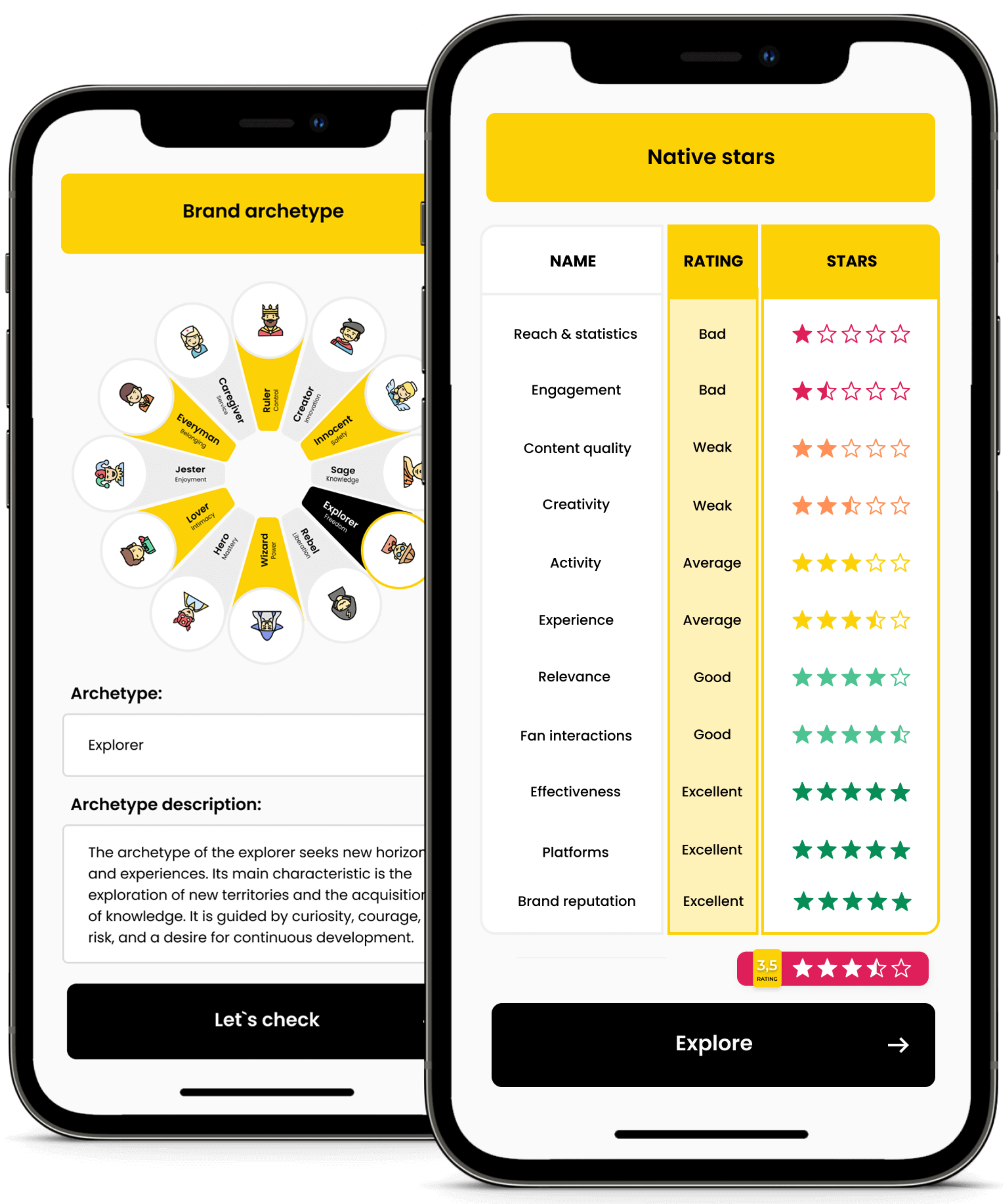
Run exceptional campaigns and collaborate with favorite creators! Harness the power of new technologies in marketing and reach your audience in an innovative way. Download the free app from Google Play and discover its inspiring features.

LET'S GO
More knowledge?
Do you want to read more valuable
and motivating content? Sign up for our newsletter.
COMMUNITY
Get social
Like our profiles, join our community,
and stay up-to-date with the world of digital content creators.